The Moon Is a Liar: Faking Lunar Light in British Cinema
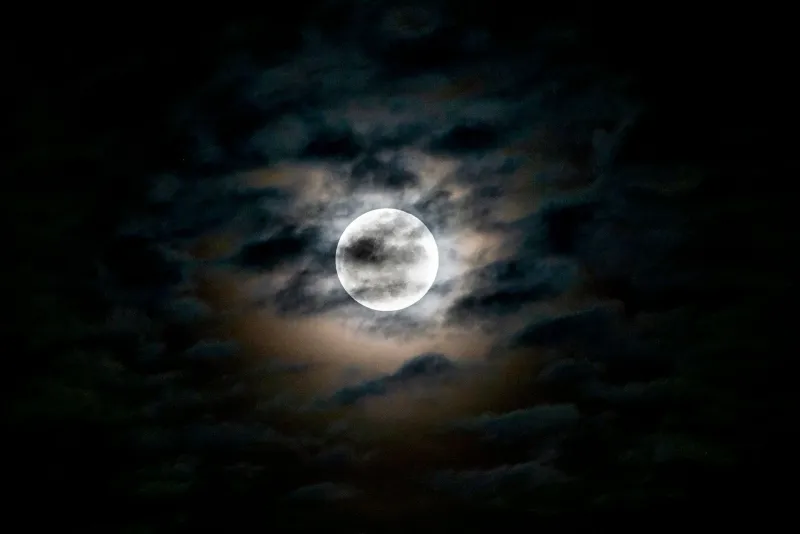
Picture the scene: a figure crosses a Yorkshire moor at midnight. The grass is silver, the drystone wall is blue, and the moon sits just out of frame like a suspicious neighbour. It is one of British cinema’s most familiar images. It is also, almost always, a fib.
Real moonlight is useless on camera. A full moon gives you roughly 0.1 lux; direct sun gives you around 100,000. Expose for the moon and the landscape turns to ink. Expose for the landscape and the moon becomes a blown-out smudge. The human eye is brilliant at dark adaptation; a sensor is not. So British filmmakers have spent decades inventing a moon that behaves, a moon you can dim, shape and schedule around the weather. The result is a tradition of lunar light that feels more truthful than the real thing.
The moon as a character, not a lamp
In British storytelling, the moon is rarely just weather. It is a timekeeper, a witness, a bad omen. Powell and Pressburger understood this instinctively: their artificial worlds in Black Narcissus and The Red Shoes were lit like fever dreams, where a single source could feel cosmic rather than practical. Later folk horror leaned on the same instinct. The moon in British folk horror is often off-screen, but you can feel it pulling the strings.
That is why cinematographers talk about moonlight as a narrative problem before a technical one. Key, fill, backlight, practical, ambient: the usual list. The moon is the 51st light, the one you never actually rig but always account for. It tells the audience that the night is quiet, or that it is not. It makes a field feel watched. It turns a window into a threat.
Why the real moon never makes the final cut
The technical reasons are simple and stubborn. Moonlight is reflected sunlight, but it arrives flat, soft and desperately dim. Your eye compensates; your camera does not. On a clear night in the Cairngorms you might get a usable exposure with a fast lens and a high ISO, but the moment you add a face, a practical lamp or a bit of movement, the whole thing falls apart. The moon also moves. It rises, sets and changes phase. It does not care about your call sheet.
So the industry fakes it. Sometimes that means day-for-night: shooting in daylight with heavy underexposure, a polariser and a cool grade. It can look extraordinary in the right hands, but in the UK it is a gamble. Winter sun sits too low; summer sun is too harsh; the weather rarely cooperates with the fantasy. More often, the moon is built on set: a large soft source through diffusion, a bounce off a silver reflector, a cold LED panel pushed through a frame of muslin. The old term is a moon box. The new term is still a moon box, just with better dimming.
The DPs I spoke to for this piece were unanimous on one point: restraint. Fake moonlight works when it behaves like a single source with a long, soft falloff. It should not be blue for the sake of blue. A touch of steel in the shadows, a warm practical in the window, a face half-lit by something that could plausibly come from the sky: that is the grammar. Overcook it and you get a shampoo advert. Underplay it and the audience leans in.
The British problem: clouds, councils and curfews
Shooting the night in Britain is an exercise in humility. The cloud cover does not read the script. The moon phase is a useful alibi but a terrible gaffer. Councils have curfews, national parks have wildlife protections, and the British weather has a particular talent for arriving just as you have rigged a 12-by-12 frame outside a farmhouse window.
That is why so much British moonlight is made in fragments: a window here, a treeline there, a close-up of a face with a single cold source and a lot of negative fill. The audience fills in the rest. It is the oldest trick in the book, and it still works because the moon is not really a light source in these scenes. It is a contract. We agree to believe that the dark has a shape.
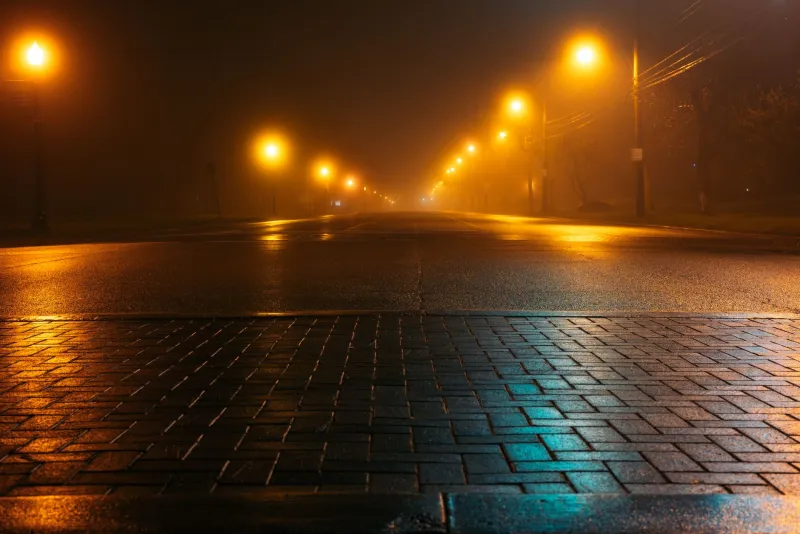
Light pollution makes the real thing even harder to find. The UK is one of the most light-saturated countries in Europe, and genuine dark skies are precious. Exmoor, Northumberland and the Cairngorms still offer nights where the moon matters. Elsewhere, the sodium glow of a town centre does the job of the moon for free, which is why so many British night scenes are lit by streetlight rather than starlight. But the moon retains a hold that orange light cannot match. It is colder, older and less reasonable.
Folk horror and the lunar imagination
Contemporary folk horror has kept the moon close. Mark Jenkin’s Enys Men and Rose Glass’s Saint Maud do not need to show a full lunar surface to make you feel watched. The moon is a poster image, a promise of dread, a sign that the landscape has its own timetable. In British cinema, lunar light often signals a world that is not entirely secular. The moon pulls tides, crops and people. It is the original unreliable narrator.
That is why faking it well matters. A bad moon looks like a blue gel. A good moon looks like a memory. The best British lunar scenes are not the most technically elaborate; they are the ones where the light seems to arrive from somewhere just beyond the frame, carrying a bit of weather and a bit of folk memory with it.
In 2026, with LED volumes and virtual production promising to put any sky in-camera, the moon still resists. You can render it, but you still have to light the face. You can schedule it, but you still have to make it feel accidental. The 51st light is not a lamp. It is the absence that makes the night legible, the lie that lets us see. British cinema has always known that. The moon is a liar, and we keep buying the story.