One Lamp, One Sheet of Card: Why British Animators Are Choosing the Silhouette Again
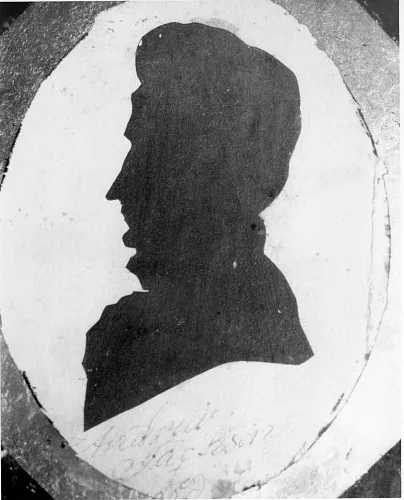
Photo: Date 1828 Attribution William James Hubard, 1807 - 1862 Sitter Andrew Jackson, 15 Mar 1767 - 8 Jun 1845 See more items in Catalog of American Portraits Credit Line Owner: Tennessee State Museum Data Source Catalog of American Portraits Object numbe
Walk into a silhouette studio and the first thing that strikes you is how little there is to look at. A table. A lamp. A sheet of tracing paper stretched over a frame. Somewhere under the lamp, a pair of hands is sliding a cut-out across the glass, and on the other side of the paper a shadow is moving — and that shadow, somehow, is the film.
The Room With One Lamp
A few doors down from a bakery in a West Yorkshire mill town, one animator works this way for hours at a stretch: cut, place, shoot two frames, nudge, shoot two more. No green screen, no render farm, no colourist waiting in a Soho suite. The whole rig might have cost less than a decent lens. An overhead projector, salvaged from a school that was throwing it out, does most of the heavy lifting.
The technique is older than cinema itself — shadow play with hands and card, then cut-out animation shot from above on glass. What's changed in 2026 is who's picking it up and why. Illustration graduates, music-video directors with £400 and a weekend, a handful of small studios that specialise in titles and idents. All of them chasing the same thing: an image with an edge you can feel.
Cardboard Doesn't Argue With Physics
Here's the quiet advantage of shooting real cut-outs under a real light. The softness of a shadow is determined by distance — move the card closer to the lamp and the edge tightens; move it towards the paper and it blurs into a smudge. Layering two or three sheets of acetate between them and you get a grey that isn't a graphic, it's a density.
You can replicate most of that digitally, of course. What you can't replicate quite so easily is the string of small accidents that come free with the process: the faint dust on the platen, the tiny warp in a card that's been handled too much, the way a hand shakes just enough to give a figure a pulse. On a big screen at a festival, those imperfections read as life. On a laptop, they read as texture. Either way, audiences lean in.
A Circuit That Wants Grain
Look through the 2026 programmes and the pattern holds. London Short Film Festival's January edition ran a strand of handmade animation; Flatpack in Birmingham has been quietly building one for years; Encounters in Bristol and Glasgow Short both keep space for work that was clearly made by hand. Manchester Animation Festival, in its usual November slot, is now the place where half of these filmmakers meet for the first time.
Music video is where the money, such as it is, has come from. A silhouette treatment is cheap to shoot, survives a small budget and looks like nothing else in a playlist — which is precisely why artists with a taste for the theatrical keep commissioning it. The appeal isn't nostalgia. It's that a black shape against warm light is legible in three seconds on a phone screen, and still holds up projected two metres wide.
What Live Action Keeps Forgetting
The interesting part is what happens when the animators talk to crews who work with actors. Repeatedly, the same three notes come back.
One source. A silhouette film has exactly one light. Everything else is bounce, or nothing. Live-action sets routinely arrive with five units and no idea what the scene is actually lit by.
Negative fill. The animators' black card is doing the work that black floppies and duvetyne do on a set — carving the edge. Darkness isn't the absence of a decision; it's the decision.
Let the shape act. In a cut-out film, a character's face is a profile and a tilt of the head. That's the whole performance. Put that constraint in front of an actor and something interesting usually happens: gestures get smaller, and the camera gets closer.
There's a phrase that keeps surfacing in conversations with these makers — the light at the fifty-first position, the one nobody's looking at. It sounds like a joke about the website, but it's a working method. The drama is in the edge between what's lit and what isn't, not in the middle of the beam.
The Reiniger Inheritance
The lineage is real, and British. Lotte Reiniger invented the silhouette feature in 1920s Germany, then settled in London from 1949 and made a run of short films here, several of them backed by the BFI's Experimental Film Fund. For decades after, cut-out animation in Britain was treated as a charming sideline — lovely for a title sequence, not serious.
That hierarchy has loosened. A generation raised on Aardman's Bristol workshop model, and on the idea that a small crew in a small room can produce something with a signature, no longer sees handcraft as a compromise. They see it as a look.
Cutting to the Light
If you want to try it, the entry cost is almost embarrassing. Black card, a scalpel, a sheet of acetate, a lamp with a decent diffuser and a camera locked off looking straight down. Set the white balance once and leave it alone. Shoot on twos, because it looks better and halves your work.
What you'll learn in an afternoon is what takes years on a lit set: that a single hard source and a well-placed shadow will carry a story further than a van full of kit. The animators aren't trying to teach anyone anything, mind. They're just cutting card, moving it a millimetre at a time, and letting the lamp do what it's always done.