The Grey Hour: Why British Night Scenes Need Their Shadows Back
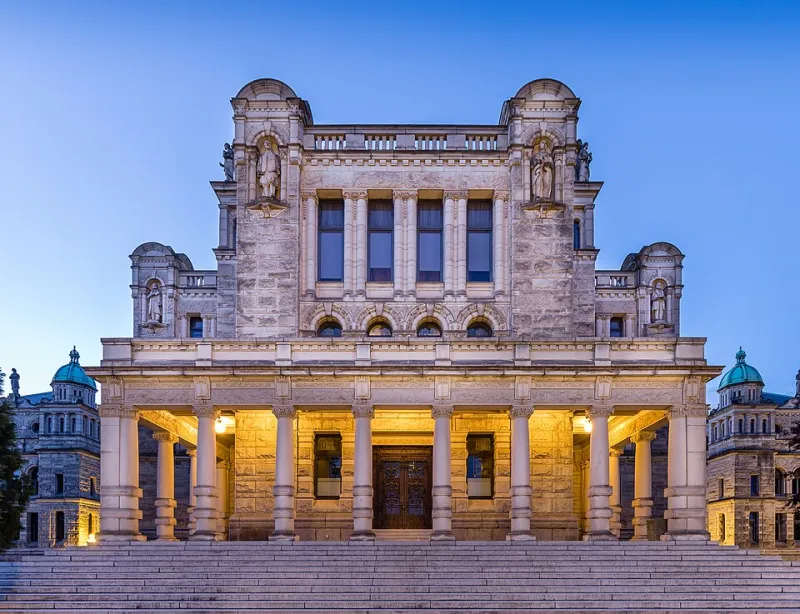
Photo: Michal Klajban, CC BY-SA 4.0, via Wikimedia Commons
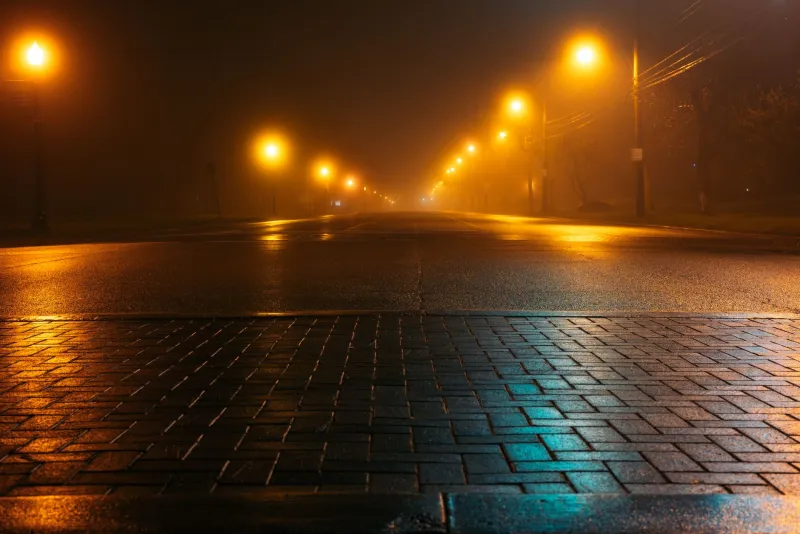
British night is not black. It is orange sodium, wet tarmac, cloud glow, a strip of light under a bedroom door. It is the colour of a bus window at 11pm and the sound of a fridge humming in a hallway. It is specific. And too often, in recent British films, it is missing.
Instead we get the grey hour: a night scene that looks overcast, flat, strangely ambient. The sky is the same value as the street. Faces are lit from every angle. Shadows have been apologetically lifted until the image looks like a photograph of a photograph. You can see everything and feel nothing.
This is not a technical failure. It is a choice — or rather, a series of small compromises that add up to a look. And in 2026, with cameras and lights more capable than ever, it is a choice we can afford to revisit.
The day-for-night hangover
Day-for-night is the old trick of shooting in daylight and grading it blue. It has a noble history. It saved money, it kept crews safe, it allowed directors to shoot night scenes in the golden hour. But it has always had a problem: the sun is not the moon. Daylight has a direction, a colour, a quality of shadow that night does not.
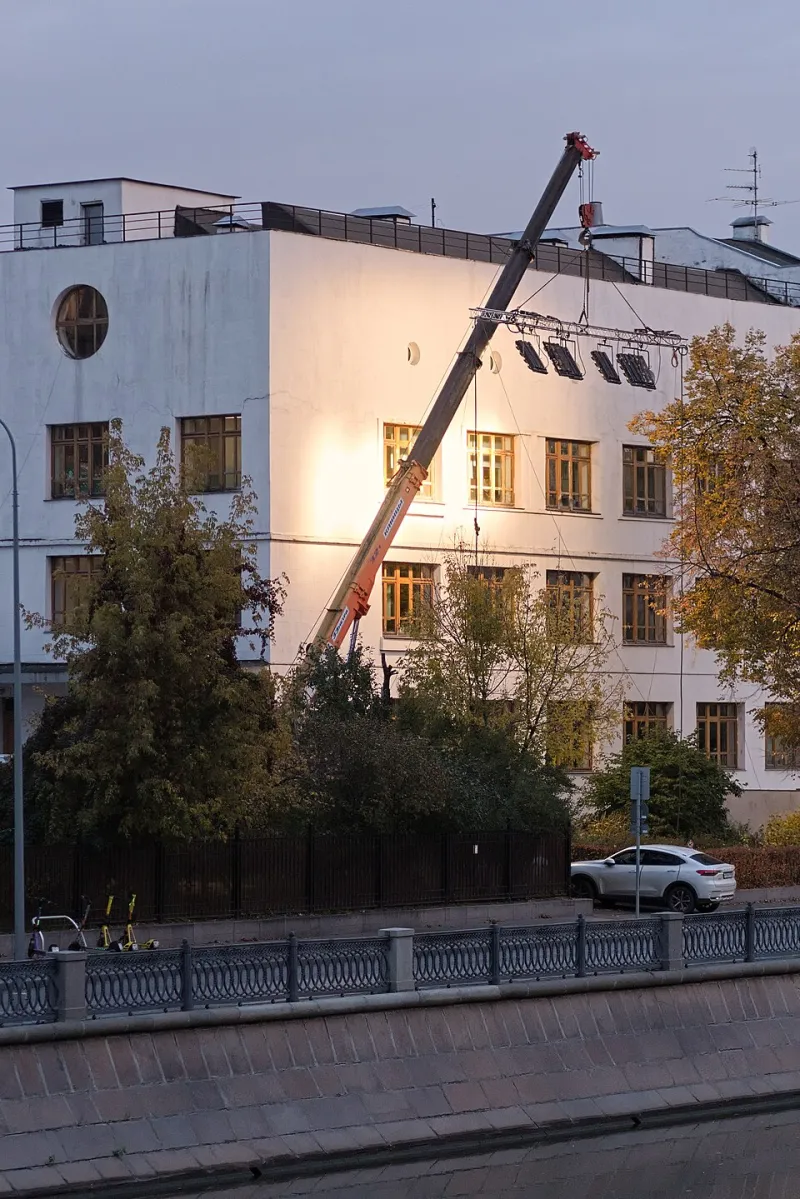
In Britain, the problem is worse. Our daylight is often already a softbox. An overcast sky is a giant diffuser. If you underexpose that and push it blue, you do not get night; you get a grey afternoon with a filter on it. The shadows are soft, the highlights are dull, and the image has no mystery.
You can see the tendency in recent UK films such as The Kitchen (2023) and The End We Start From (2023), where night is often rendered as a desaturated grey rather than a textured dark. A night chase that should be a study in sodium and wet brick looks like a car advert shot at dusk. A bedroom scene that should be intimate and dark is lit like a showroom. The night is not a place; it is a grade.
The LED era made it too easy to see
LED lighting has been a gift to British crews. It is cooler, faster, more controllable. You can dial a colour temperature, dim without flicker, and rig a source in a space that would have been impossible twenty years ago. But convenience has a side effect: it is easy to fill everything.
A lot of modern night scenes are lit with soft, broad sources from multiple angles. The result is an image with no darkness in it. The actor is readable, the set is readable, the background is readable. But night is not about readability. Night is about what you cannot see.
One UK cinematographer I spoke to put it bluntly: “We have all these tools, and we use them to make night look like a well-lit day. Then we wonder why it doesn’t feel like night.” They added that the problem is often not the light but the fear of black. “Producers want to see the money on screen. Darkness feels like a mistake.”
That fear is understandable. Streaming compression, phone screens, badly calibrated TVs — all of it pushes towards brighter, flatter images. But the answer is not to flood the frame. The answer is to use contrast deliberately. Let the background fall away. Let a face be half in shadow. Let the streetlight do the work.
What British night actually looks like
The irony is that Britain is a great place to shoot night. Our cities have mixed colour temperatures: warm sodium, cold LED, the blue flicker of a takeaway sign. Our weather gives you atmosphere for free. Wet streets reflect. Fog softens. Cloud holds the glow of the city and throws it back down.
The films that get this right tend to be the ones that treat night as a location, not a post-production effect. They scout for the right street, the right hallway, the right window. They use practicals — a bedside lamp, a security light, a bus shelter — and then shape around them. They are not afraid of a little smoke.
The lesson is not “shoot darker”. It is “shoot more deliberately”. A night scene can be bright if the brightness is motivated. A kitchen at 2am can be lit by one strip light and a fridge. A car park can be lit by a single sodium lamp. The key is that the light has a source, a colour and a direction. It should feel like it belongs to the place.
Four practical fixes for the grey hour
- Test your black level. Before you shoot, look at the monitor in a dark room. If the shadows are already grey, you have nowhere to go. Protect the low end.
- Use negative fill. A piece of black cloth on a wall can do more for a night scene than another light. Take away the fill; let the shadows sit.
- Motivate the source. Every lamp should have a reason. If you cannot explain why it is on, turn it off.
- Add atmosphere. Haze, smoke, rain, a dirty window. Night needs texture. Clean air looks like a studio.
The case for letting it be night
We are not arguing for murk. We are arguing for atmosphere. There is a difference between a scene that is hard to see and a scene that is full of darkness. The first is a technical problem; the second is a creative choice.
British cinema has a long history of doing this well. Think of the expressionist shadows of early British noir, the fog-bound streets of post-war London, the sodium-lit estates of the 1980s. These films were not afraid of black. They used it to tell us something about the world: that it is uneven, that it is dangerous, that it is beautiful in a way that only half-light can be.
In 2026, we have the tools to do that again. Cameras with dual native ISO can shoot in near-darkness. LED fixtures can be dialled down to a whisper. Grading software can hold contrast without crushing. The limitation is not technology. It is habit.
So here is a modest proposal for British filmmakers: the next time you write “NIGHT”, do not reach for the blue gel. Go outside. Look at the street. Notice how the light falls. Then try to shoot that. The grey hour is not inevitable. It is just a choice we have got used to making.
At 51st Light, we would rather see the dark.