Borrowed Midnight: The Art of Faking Night While the Sun Is Still Up
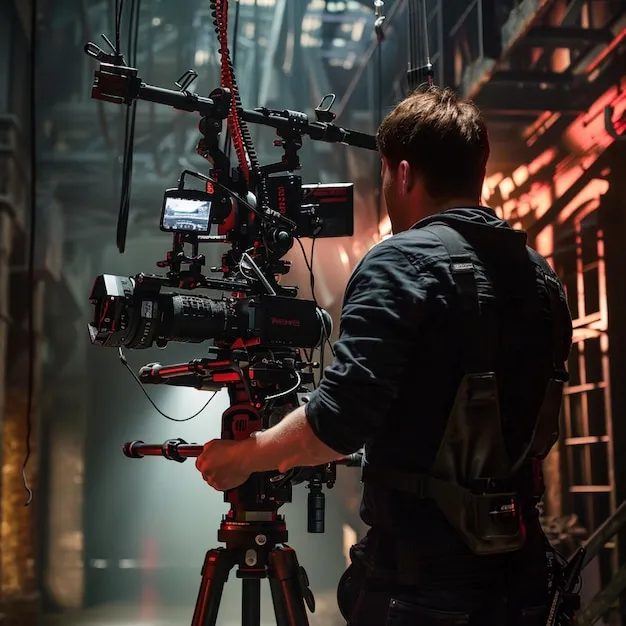
Photo: cinematographer adjusting ND filter on cinema camera at British summer sunset field, via img.freepik.com
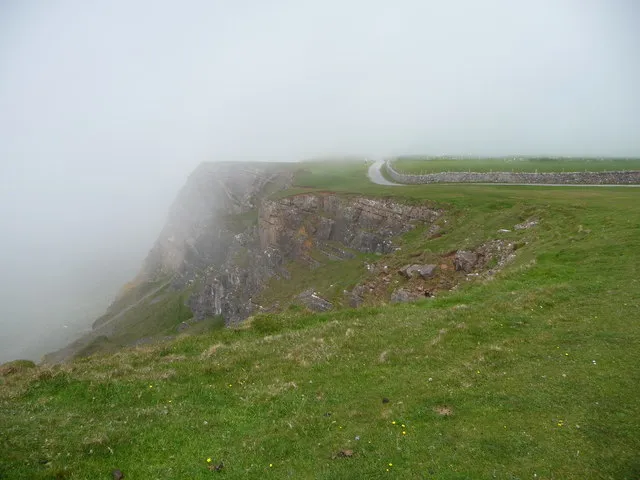
By 13 November, the UK has finally remembered how to be dark. Sunset lands before teatime in much of the country, the streetlights come on while the kettle is still warm, and a night scene can be shot at night. Come June, that same scene becomes a puzzle. In London, twilight can linger past 10pm. In the far north, Shetland can make a mockery of the word dusk. For any filmmaker who needs black sky and a moon, Britain's summer is a country that refuses to darken.
That is the long dusk problem, and it has a long-running solution: day-for-night. Shoot in daylight, expose and grade so the image reads as midnight. It is one of cinema's oldest practical lies, and in a British context it is less a trick than a survival skill.
The tyranny of the solstice
A director of photography working on a low-budget British feature this year describes the summer schedule as a negotiation with the sky. You can wait for the sun to go down, but in June you are often waiting for a mood that never fully arrives. The blue hour is brief. The true black is late. And if your cast and crew are on a nine-hour day, the maths stops working very quickly.
So you shoot night in the afternoon. You find shade. You frame out the sky. You underexpose. You add a little coolness in the grade and hope the audience accepts the bargain. Sometimes it works beautifully. Sometimes it looks like a sunny Tuesday pretending to be 2am.
What the filter actually buys you
The first tool is usually a neutral density filter. ND glass cuts light without changing colour, letting a cinematographer open the aperture or slow the shutter in bright conditions. For day-for-night, the aim is not simply to make the image darker. It is to make the image behave as if the sun has gone. That means controlling highlights, protecting detail in the shadows, and stopping the sky from blowing out into a white flag.
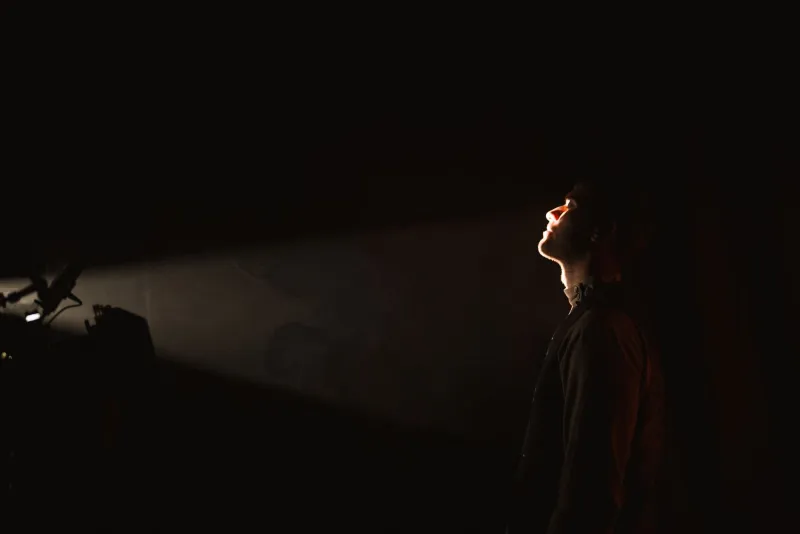
A polariser can help. So can careful choice of lens and angle. Shoot into a shaded side of a building, and the light falls off in a way that feels closer to moonlight. Put a long lens on a subject and compress the background until the horizon disappears. Add a little haze or smoke, and the image softens in the right way. The trick is not to underexpose everything and call it night. It is to create a version of night that has shape, contrast and a believable source of light.
The giveaway is usually the sky. A deep blue grade can only do so much when the clouds are still lit like a summer afternoon. Shadows are another tell. At midday, they are short and hard. At midnight, they should be long, soft or absent. If the script allows it, shooting in open shade is often more convincing than shooting in direct sun and trying to rescue it later.
A technique with history
Day-for-night is not a digital-age shortcut. Post-war British thrillers used it because schedules were tight and night shooting was expensive. The same compromise appears across low-budget cinema everywhere: if you cannot afford to light the dark, borrow the day and bend it. In the 2026 crop of micro-budget British features, the technique is still alive, though the tools have changed. On-set monitors, raw codecs and sophisticated grades can make a daylight image look more nocturnal than ever, but they can also make the lie too clean. A little grain, a little imperfection, often helps.
There is also a practical middle ground. Some productions shoot at actual dusk and push the image further than they would in winter. Others use a mix of day-for-night for wide shots and true night for close-ups, where the audience is less likely to notice the join. The result is a patchwork, but cinema has always been a patchwork. The audience is not there to audit the sun's position. They are there to believe the story.
The compromises you can see
When day-for-night goes wrong, it tends to go wrong in familiar ways. The sky is too bright. The shadows are too short. The sun is plainly visible in a character's eyes. Birdsong arrives in the middle of a tense night scene. The image is crisp in a way that real darkness rarely is.
Some of these problems can be fixed in the grade. Others cannot. You can cool the image, crush the highlights and add contrast, but you cannot easily invent a moon or remove the memory of a bright afternoon. That is why so many cinematographers prefer to embrace the artificiality. If the scene is stylised enough, the audience accepts the convention. A blue wash, a hard key, a rim light and a sky that reads as deep navy can be more persuasive than a technically accurate image that feels flat.
Why it still works
Day-for-night is a compromise, but it is also a form of expression. It asks the audience to meet the film halfway. In a country where the summer sun refuses to clock off, that bargain is sometimes the only one on offer. The result can be poetic: a landscape drained of warmth, a face lit by a false moon, a road that looks like it leads into the dark even though the birds are still singing.
For 51st Light, that is the interesting part. The craft is not in pretending the sun has gone down. It is in using light and shadow to create a feeling of night that the clock refuses to provide. British filmmakers have been doing it for decades, and in 2026 they are still borrowing midnight from the afternoon. Sometimes the borrowed version is the one that stays with you.