The Face Above the Flame: British Cinema’s Low-Light Confessions
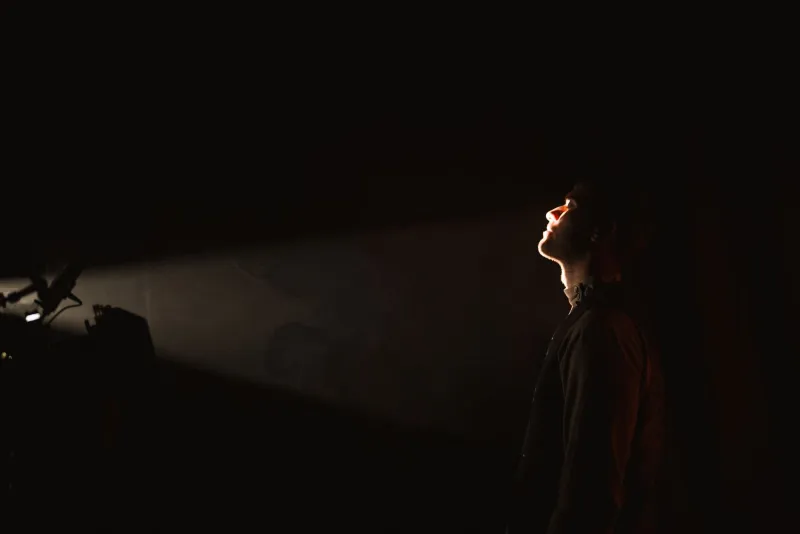
British films have always been suspicious of a well-lit face. Not because we dislike beauty, but because an evenly lit face can look like it has nothing to hide. The uplight is the opposite: a lamp under the chin, a fire at floor level, a streetlamp leaking through a basement grate. It makes the nose throw a long shadow, hollows the eyes and turns the jaw into a cliff edge. In the wrong hands it is a party trick. In the right ones it is a moral instrument.
The Lamp Beneath the Floorboards
Think of the classic British low-light setup: not a grand chandelier, but a bare bulb in a cellar, a match cupped against the wind, a torch held low by someone who does not want to be seen. The source is usually small, close and practical. That matters. A big soft light from below looks like a mistake; a small hard light from below looks like a secret.
In post-war British noir, this grammar was already in place. Brighton Rock (1947) turns Pinkie’s young face into something older and sharper, and the seaside lighting often feels like it is coming from the pavement rather than the sky. They Made Me a Fugitive (1947) uses hard low sources to make rooms feel like traps. The Third Man (1949) is not a British film in the strictest sense, but its sewer torchlight and doorway shadows taught British audiences that a face lit from below can be both charming and guilty. The trick is not the angle itself. It is the implication: someone is holding the light, or something is burning, or the street outside is doing the lighting because the room inside cannot afford to.
Firelight, Gratings and the Accusing Torch
Firelight is the oldest uplight we have. It flickers, it moves, it makes the face seem to be listening. In British period drama, a hearth can warm a room or turn it into a courtroom. The same flame that makes a cottage cosy can make a face look old, tired or accused. That double meaning is very British: comfort and judgement in the same source.
Streetlight through a basement grate is the urban version. It is low, barred and usually sodium-orange, which is why so many British night scenes feel like they are taking place under a warning sign. The light comes from below and through a grid, so the face is already patterned with obstruction. You do not need dialogue to explain that someone is trapped. The grate does it.
Then there is the torch. A torch under the chin is almost a cliché, but British cinema keeps returning to it because it is honest about power. The person holding the torch controls the story. In Kill List (2011), low torchlight in a cellar makes the space feel archaeological, as if the characters are digging up something that should have stayed buried. In Saint Maud (2019), candles and bedside lamps often sit below the eyeline, turning devotion into something queasy. The light is not just dark; it is close, intimate and slightly wrong.
A Short History of Looking Up
By the 1980s, the uplight had become a way to photograph class. The Long Good Friday (1980) and Mona Lisa (1986) put hard low sources in clubs, cars and council flats, making faces look lit by the city rather than by a studio. In Nil by Mouth (1997), the domestic lighting is often ugly and available, and that ugliness is the point: the room is not designed to flatter anyone. This Is England (2006) uses low window light and bare bulbs to make a kid’s face look both young and exposed. The low source does not always mean danger. Sometimes it means being seen too clearly by a system that has already made up its mind.
Class, Guilt and the Lit Chin
The uplight is a class signifier because it suggests a room without overhead lighting, or a street without polite illumination. A face lit from below is often a face that cannot afford to control its own image. It is also a face that looks guilty, because we associate low light with interrogation, campfires and ghost stories. British cinema loves this ambiguity. The same shot can make a character look powerful or cornered, depending on whether the light is held by them or aimed at them.
In contemporary drama, the grammar has become more naturalistic. Phone screens, laptop glow and cheap LED strips now provide the uplight, and they carry a different anxiety: not the campfire or the torch, but the screen. A face lit by a phone at 2am is a face lit by someone else’s message. It is low, close and blue, and it makes the eyes look sleepless. That is the 2026 version of the old cellar bulb: still a source from below, still a source that knows too much.
When Low Light Works
The first rule is motivation. If the audience cannot work out where the light is coming from, the shot starts to feel like a stunt. Show the fire, the grate, the phone, the hand holding the torch. A low source should have a reason to be low.
The second rule is restraint. A small hard source just below the eyeline can create unease without turning the face into a mask. Push it too far under the chin and you are shooting a campfire ghost story. For drama, a 15–30 degree angle below eyeline is usually enough. For interrogation or horror, go steeper. For naturalism, let the source sit where it would in the room and shape the falloff with flags and distance.
The third rule is eye light. Shadows can swallow the cheeks, but the eyes still need a glint. Without it, the face stops reading as a person and starts reading as a skull. A tiny bit of bounce or a weak fill on the shadow side can keep the performance alive without killing the mood.
The fourth rule is colour. Sodium streetlight, tungsten bulbs and cold LED screens all tell different stories. Warm low light feels domestic and dangerous. Cold low light feels institutional. Mixed low light — a fire plus a phone — feels modern and unsettled.
When It Turns Into a Ghost Train
An uplight becomes a ghost story when the source is unmotivated, the flicker is too regular, or the shadows are so deep that the face stops being a face. If the audience starts thinking “torch under chin” rather than “this person is in trouble”, you have lost. The fix is usually not less light but more context: show the grate, the fire, the phone, the hand holding the torch. Let the source explain the angle.
At 51st Light, we keep coming back to this because it is a perfect example of shadow and light doing narrative work. A low source is not inherently cinematic. It is a question. Who is holding the light? What are they looking at? And why does the face above it look like it already knows the answer?