The Glow Under the Door: Why British Cinema Trusts Light You Can’t See
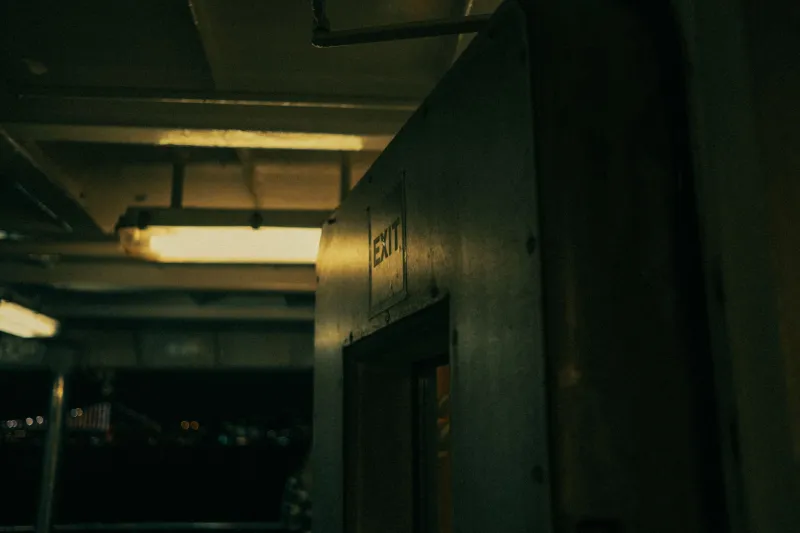
British cinema has always been fond of the almost-light. Not the big beam through the window, not the heroic key light, but the pale strip under a bedroom door. The flicker from a television in another room. The orange bleed of a streetlamp we never actually see. It is a very particular trick: you build a whole world out of what the frame refuses to show.
That habit is having a quiet moment again in 2026. Not because anyone has invented a new lamp, but because British directors and cinematographers are remembering that atmosphere is often stronger when the source stays off-screen. You do not need to show the fire to feel the heat.
The drama in the gap
An off-screen light is a rumour with a dimmer switch. It tells you someone is home, or someone has just left. It suggests a corridor, a stairwell, a nightclub, a hospital ward. The audience does the rest. That collaborative gap is where British cinema has always been comfortable, partly because so many of our best films are built on rooms that feel too small and lives that feel overheard.
A visible lamp has to be motivated. It has to sit in the production design, match the practicals, survive the blocking and not look like a prop from a hire shop. A light just outside the frame only has to feel true. That is a huge difference. It lets a cinematographer work in suggestion rather than statement. The glow under the door can be a hallway, a sunrise, a fire alarm or something much worse. The audience will meet you halfway, and usually they will meet you somewhere more interesting than the thing you could have built.
A noir inheritance, not a noir invention
The technique is not new. British noir of the 1940s and 1950s was full of light bleeding in from elsewhere: stairwells, pub windows, railway arches, the back rooms of boarding houses. In It Always Rains on Sunday the domestic spaces are constantly interrupted by light from outside, as if the city is pressing its face against the glass. The Third Man turned the unseen source into a whole grammar of unease, with shadows that seem to arrive before the person who casts them.
Later, Peeping Tom made the projector beam itself a kind of off-screen threat, and the kitchen-sink dramas of the 1960s often used window light as a moral pressure rather than a pretty effect. None of this was about showing off. It was about making the room feel porous, connected to a world the camera could not quite contain.
Why the unseen often beats the seen
Several British cinematographers I spoke with for this piece made the same point in different ways: the moment you put the source in frame, you start solving a practical problem. The moment you keep it out, you are solving a dramatic one. An on-screen lamp has to look plausible. An off-screen lamp only has to behave plausibly. It can be a £20 tungsten bulb bounced off a sheet of poly, or a tube hidden behind a door frame, or a bit of warm kick from a corridor that exists only in the lighting plan.
That is not laziness. It is editing before the edit. You are deciding what the audience needs to know and what they can imagine. In 2026, with LED panels and software doing things that would have astonished a 1990s gaffer, the temptation is to show everything. The result can be beautiful and a bit airless. Off-screen light restores a little mystery. It lets shadow do its old job, which is not simply to hide things but to imply that there is more to hide.
There is a practical advantage too. British productions are often shooting in tight terraces, basements, church halls and rented flats where a full window unit is not an option. A hidden source can suggest a window without pretending to be one. It can make a low-budget room feel bigger, older and stranger. It can also save a schedule without looking like a compromise, which is the sort of trick every producer pretends not to love.
The 2026 rediscovery
What has changed this year is not the technique but the appetite for it. A run of British dramas and shorter-form projects have been leaning into darkness again, not as a colour grade but as a compositional choice. Characters stand at the edge of rooms. Doorways glow. Corridors become strips of amber and black. The light source is often somewhere just out of shot, doing the work of a whole set.
You can see the appeal. After years of streaming polish, where every corner of a frame is legible and every face is evenly lit, implied light feels like a return to grammar. It gives the audience a job. It also flatters British locations, which rarely need much help to look haunted. A pebbledash wall, a net curtain, a stair carpet and a sliver of light from the landing can do more than a truck full of equipment.
The best of the new work uses the trick without nostalgia. It is not a tribute to black-and-white noir. It is a way of shooting colour with restraint, letting a sodium-orange glow sit next to a cold blue hallway, or letting a single warm line under a door carry the emotional weight of a scene. The source is absent. The feeling is not.
Shooting a light you never show
The craft comes down to discipline. Decide what the unseen source is, even if the audience never will. Know its colour temperature, its direction, its distance and its mood. Keep it consistent. If the glow under the door changes between shots, viewers may not know why, but they will feel it. The off-screen lamp still needs a plug, a flag and a reason.
Then trust the frame. Let the edge of the shot do some of the storytelling. Let the darkness sit. Let the light arrive from somewhere just beyond the glass. British cinema has spent decades proving that the most memorable light is often the light that has just left the room. In 2026, that lesson is worth keeping switched on.