Mist Opportunity: The Quiet Craft of Lighting British Fog
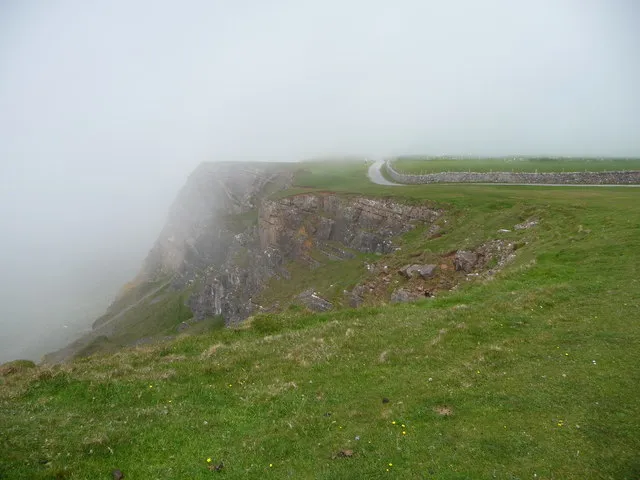
Photo: Jeremy Bolwell , CC BY-SA 2.0, via Wikimedia Commons
There is a moment on a Welsh cliff, usually just after dawn, when the sea simply stops. One minute there is water and a horizon; the next there is a pale wall of air, soft as muslin, and the whole landscape has been relit. British cinematographers have been chasing that moment for decades. Fog is not merely something that happens to a shoot. It is one of the country’s most expressive lighting tools.
At 51st Light we tend to look at cinema through shadow and light. Fog is the interesting middle ground: it makes light visible without making it hard. It turns a landscape into a studio, a street into a stage, and a face into something half-remembered. It is also, for a certain kind of British film, the closest thing we have to a national texture.
The Original Softbox
A gaffer will tell you that the best diffusion is the diffusion you do not have to rig. Fog does that work for free. It wraps around faces, lifts the shadows, separates foreground from background and removes the hard edge between what is lit and what is not. Where a naked lamp might carve a cheekbone, fog lets the light sit in the air like dust in a projector beam.
This is why mist suits British cinema so well. We are a country with a lot of soft weather and a long tradition of filming in it. The postwar Ealing melodramas understood that mist could be moral weather as much as meteorological fact: a grey morning could carry disappointment, secrecy or a kind of damp mercy. Later British horror realised that fog does not need to be dark to be frightening. It only needs to take the horizon away.
Contemporary UK filmmakers have picked up the same grammar. Coastal horror and folk-tinged drama use sea mist to make the land feel provisional, as if the map has not quite dried. In Enys Men, the Cornish weather is not a backdrop; it is a collaborator. In The Woman in Black, the marsh and the mist do the work that a lesser film would hand to a smoke machine and a close-up. The dread comes from not being able to see the edge of things.
Dread Without Darkness
Most horror lighting conversations start with what to leave in shadow. Fog offers a different bargain. It creates uncertainty without blackness. A figure can be fully lit and still unreadable because the air around them is doing something strange. A road can be bright white and still feel like a trap. Fog hides scale, flattens distance and makes familiar places feel newly arbitrary.
The Innocents knew this. So did the BBC ghost-story tradition, which often preferred a grey wash to a gothic black. When everything is visible but nothing is clear, the audience leans in. That is a different kind of fear from the jump scare. It is the fear of a landscape that has stopped explaining itself.
For directors, fog is also a practical friend. It hides the join between set and location. It softens an unflattering background. It gives a low-budget production a way to suggest depth without building it. Used badly, it is a cliché. Used well, it is a form of visual grammar: a comma in the sentence of a scene.
What the De-Haze Button Takes Away
Here is where the digital age gets tricky. De-hazing tools in post-production are clever, and sometimes necessary. But they are often used as a reflex. A shot comes back with atmosphere in it, and someone reaches for the slider to make the background pop. The result can look cleaner and less alive. Fog has colour, movement and a sense of place. It carries the particular grey-green of the North Sea or the yellow-white of a Thames morning. De-haze it too hard and you get a generic period drama instead of a British one.
The risk is not just aesthetic. It is cultural. A country’s cinema is partly made of its weather. If every misty frame is flattened into crisp, evenly lit clarity, we lose one of the few textures that cannot be faked convincingly in a suite. The answer is not to fetishise fog, but to treat it as a deliberate choice. Keep some haze. Let the horizon go missing. If you can see everything, ask whether you should.
Notes from the Locations
Practical fog work is mostly patience. Natural mist is best, but it is unreliable. Watch the dew point, the tide and the wind. Sea fog can arrive in minutes and leave just as fast. Inland fog often sits in valleys and along water. Fog machines need calm air; a breeze will turn your carefully placed atmosphere into a thin smear. Use a hazer rather than a heavy smoke machine if you want depth without obvious plumes. Wet down the ground before dawn so the mist has something to hold onto. Backlight it. Do not light fog from the front unless you want milk. Put a lamp behind the subject and let the beam travel through the air. Protect the lens, check contrast on a monitor, and shoot a test de-haze before post commits to anything.
Most of all, build in waiting time. Fog does not obey a call sheet. The best mist scenes are often the ones where the crew stood around for an hour and then got ten minutes of something extraordinary.
A Short Guide to Fog-Friendly Britain in 2026
The North York Moors and Cleveland Hills offer inland mist and big skies. Dartmoor and Exmoor are reliable for valley fog and wet, low-light mornings. The Norfolk Broads give you water, reeds and a horizon that dissolves. The Ceredigion coast and Cardigan Bay are excellent for sea mist, especially when the tide turns. The Scottish Highlands will do almost anything you ask, weather permitting. The Peak District and Lake District are close enough for a short shoot and varied enough for a week. Romney Marsh remains one of the eeriest lowlands in England when the air drops.
In 2026, check the Met Office and tide tables, get permits early, and plan for access rather than spectacle. Fog is not a location you can book. It is a condition you have to meet halfway.
That is the quiet pleasure of it. British fog does not flatter a production; it collaborates. It softens the light, hides the edges and reminds us that atmosphere is not a post-production problem. Sometimes it is the whole point.