Lights Out, Cameras On: Five British Places Where Night Still Looks Like Night
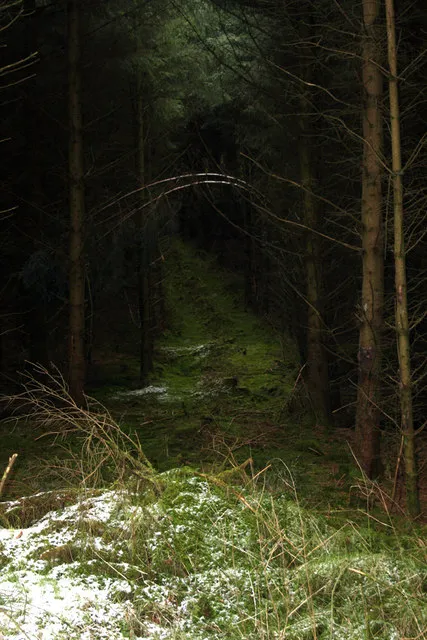
Photo: Bob Cowan, CC BY-SA 2.0, via Wikimedia Commons
I have a small, unreasonable vendetta against fake night. You know the shot: a full blue wash over everything, a hard backlight through a window, and an actor squinting into a 1x1 panel pretending to be guided by the moon. It's a look we inherited from a technical compromise and then turned into a house style, and it makes every British field, lane and clifftop look exactly like every other one.
Real darkness does something no gel can. It gives you a sky with something in it, a horizon you can read, ground that falls away instead of sitting flat under a wash. It also forces discipline: fewer units, longer exposures, faster glass, and a crew that has to actually look at where the light is coming from.
So here are five places in the UK where night still behaves like night — chosen with an eye on access, weather, and whether you can realistically get a small crew in and out without annoying anyone. Bring a red headtorch and read the access notes properly; the darkness is the easy bit.
Galloway Forest Park, Dumfries and Galloway
The big one, and the obvious starting point. Galloway was designated a Dark Sky Park back in 2009, one of the earliest in the world, and on a clear, moonless night the Milky Way reads like a smear of spilled milk across the whole sky. For a cinematographer used to fighting skyglow, it's almost disorienting.
It's also enormous, which is the practical appeal. You can find a foreground — a loch edge, a stand of conifers, a ruined wall — without a single streetlamp in frame.
Scout notes. Forestry and Land Scotland manages most of the land, and you'll need permission for anything beyond casual access; commercial shoots should go through them early. The Scottish Outdoor Access Code gives you a lot of freedom on foot, but vehicles, generators and kit dumps are a different conversation. Midges between June and August will make a night shoot feel like a hostage situation, so plan for spring or autumn. Track the moon phase before you commit a crew: a full moon here is genuinely useful as a key light, and a new moon is genuinely black.
Kielder, Northumberland
The Northumberland Dark Sky Park is the largest protected dark-sky area in England, and Kielder Water gives you something rare: a big reflective surface under a big sky. Water at night, lit by starlight alone, will hold an exposure in a way that grass never will.
Kielder Observatory runs public sessions, and the surrounding forest blocks are well mapped, which makes recce work straightforward. It is also cold, high and exposed, with a wind that seems personally motivated.
Scout notes. Much of the area is Forestry England or Northumbrian Water land, so expect a permissions conversation and a site-specific risk assessment. The observatory site itself is off-limits for filming during operations — don't turn up and start rigging in someone's viewing area. Take hand warmers, take spares, take more batteries than you think. At these temperatures a camera battery loses usable capacity fast, and a night that starts at 20:00 will still be going at 03:00.
Bannau Brycheiniog, Wales
The park formerly known in English as the Brecon Beacons — the Welsh name has been the official one since 2023, and it's worth getting it right in your paperwork as well as your captions. The northern escarpments give you something British night shoots often lack: elevation and silhouette. Ridge lines read against the sky, and on a clear night the whole horizon becomes a natural softbox of starlight.
Scout notes. Natural Resources Wales handles permissions on its land, and the national park authority can point you at sensitivities around wildlife and livestock. Upland access at night is a genuine safety matter — tell someone your route and your out time, carry a proper torch for the walk in even if you're shooting by moonlight, and don't rely on phone signal. Waterproof everything. This is a place where the weather changes its mind mid-setup and doesn't tell you.
The Norfolk coast
Specifically the quieter stretches around Kelling Heath, Wiveton Downs and the shingle between Blakeney and Salthouse. This is one of the few places in eastern England where you can point a lens at the sea, at night, and see nothing man-made at all — no rigs, no harbour lights, no ferry on the horizon.
The coast also gives you a sky you can use twice: reflected in wet sand and in standing water along the marsh tracks.
Scout notes. The area is riddled with designations — AONB, National Nature Reserve, SSSI, and a lot of it is National Trust. Permissions get complicated quickly and the answer is often no for vehicles, so plan for a walk-in with a light kit. Winter is better for darkness and worse for tides; check tide tables like your life depends on it, because on the north Norfolk marshes, it partly does. Avoid disturbing roosting and over-wintering birds — the wardens will notice and they will be justified in being cross.
The Isle of Coll, Inner Hebrides
Coll is small, low, and dark in a way that feels almost geological. It holds Dark Sky Island status, the community is small and the nearest significant light source is a long way across water. Population: a few hundred. Streetlights: barely worth the name.
It is also beautiful in a specifically cinematic way — white beaches, machair, a ruined castle, and a horizon that goes on forever.
Scout notes. This is a ferry job, so build travel and weather days into the schedule or you'll lose a shoot to a cancelled sailing. Local cooperation is everything: talk to the community trust, be honest about what you're doing, and be prepared to be told no. The upside is that a genuinely supportive island population will bend over backwards for a crew that behaves itself.
The case for shooting in the actual dark
Here's the argument, and then I'll get off the soapbox.
A full moon is roughly 400,000 times dimmer than the sun. In practice, on a clear night with a fast prime wide open and a sensor you're happy to push, you can get a usable image. It won't be clean. It will be atmospheric, and the noise will look like grain rather than error. The light has a quality you cannot fake with a gel, because it is genuinely directional, genuinely soft, and genuinely coming from one enormous source that changes position through the night whether you like it or not.
Blue-gel moonlight looks wrong because we don't see night as blue. In low light the eye shifts toward rod vision, which is more sensitive to shorter wavelengths, and the whole world desaturates and reads silver-grey. Blue is what we've seen in films, so we've absorbed it as truth. It isn't.
And there's a budget argument too. A generator, a couple of HMIs and a night of cable-bashing costs money and time; a fast 35mm at T1.4 against a real sky costs a lens hire. For low-budget UK productions in particular, learning to work with the dark instead of defeating it is not just more beautiful. It's cheaper. You just have to be patient, plan around the moon, and accept that the sky gets a vote.
Which, given what this whole business is about, seems only fair.