The Cheapest Film School in Britain: What Three-Minute Music Videos Still Teach the Movies
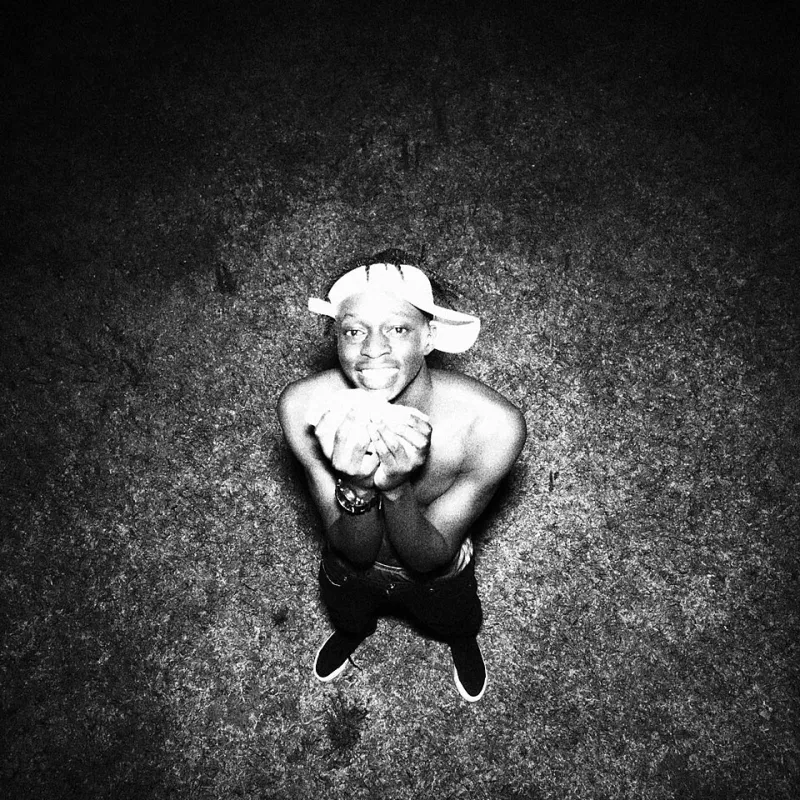
Photo: Chinabwoyy, CC0, via Wikimedia Commons
There is a particular kind of British music video that looks like it cost a fortune and, according to everyone involved, cost about as much as a used van. You know the type: one location, two lights, a practical lamp doing most of the work, and a shot that shouldn't be possible on the schedule. It goes out on a Friday, gets clipped into a hundred formats, and disappears. Six months later, some of its grammar turns up in a feature trailer.
That circulation of ideas — from three-minute promo to ninety-minute film — is the thing worth defending. Not because music videos are underappreciated (they have their own awards, their own discourse, their own devotees), but because they remain the only corner of the UK screen industry where a director can fail interestingly on someone else's money and be hired again anyway.
What a short deadline actually does
A promo typically has a treatment, a budget, a crew, one or two shooting days and a delivery date that arrives whether or not you're ready. There's no second act to hide in. If the idea doesn't land in the first eight seconds, it doesn't land.
That pressure produces a specific skillset: solving lighting with positioning rather than kit, treating colour as a narrative device rather than a correction, and knowing exactly how far you can push a shot before the label's notes arrive. Directors who work this way get very good at the thing features are notoriously bad at — deciding.
Shadow as a budget line
Look closely at the best British promos of recent years and you'll notice how many of them are dark. Not murky-dark, but deliberately underlit: faces half-lost, a single practical burning in the corner of the frame, silhouettes doing the work a set build would otherwise have to do. Darkness is cheap. It hides the edges of a location you couldn't afford to dress. It also happens to be beautiful, which is a happy accident of economics.
The directors who've built reputations on this are worth naming. Oscar Hudson has spent years turning simple spatial conceits into single-take illusions — the corridor that keeps unfolding, the room that rearranges itself — all of it achieved on set, in camera, with planning standing in for cash. Nadia Lee Cohen works in a hyper-saturated register that treats colour as costume, and keeps returning to film stock to get the particular heat she's after. Aidan Zamiri moves between fashion and pop with a looseness that makes tight schedules look like a stylistic choice.
Behind them sits a support structure that rarely gets credit: the London production companies and the freelance crews — the gaffers, sparks, focus pullers and runners — who can turn a warehouse in Beckton into something cinematic between 7am and 9pm because they've done it forty times before.
The 16mm question
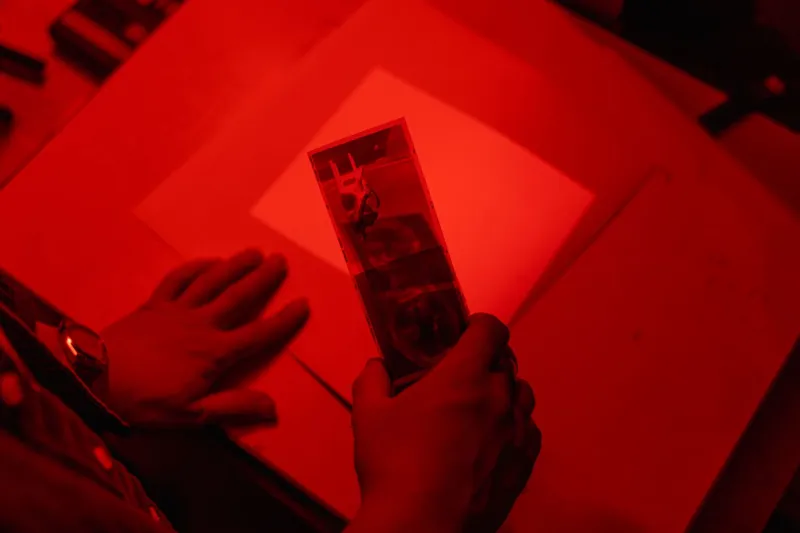
One change since the analogue revival took hold is that more promos now shoot on celluloid than at any point in the last fifteen years. Short ends, recans, a couple of hundred feet left over from a feature — it's how a small production gets a film look without a film budget. The constraint is brutal and useful: eleven minutes per roll, so you rehearse.
Directors who've done it describe the same conversion. You stop shooting coverage. You start shooting the shot. And when you go back to a bigger job with a monitor and unlimited cards, you notice how much time you used to spend being uncertain.
What features keep forgetting
Here's the uncomfortable argument. Most British features are shot with more resources and less nerve than the average promo. Not because feature directors are timid — because the risk profile is different. A feature has financiers, insurers, a schedule that costs money every hour it slips. Caution is rational.
But caution is also visible on screen. The promo's advantage is that nobody's career depends on it being safe. So it can be strange, ugly, over-lit, deliberately wrong. It can run a shot for the whole song. It can put the camera where an AD would say no.
The best features borrow that energy without inheriting the chaos. They keep the practical lamp and the long take; they lose the eighteen-hour day. That transfer has been happening quietly for years, and it's the strongest argument for treating the music video as infrastructure rather than ephemera — a place where craft gets tested at low cost and high speed, in public.
The cost of losing it
Budgets are tighter than they were, and the old MTV-and-CD:UK economy that once funded this work is a memory. Label marketing spends differently now; a promo is often one asset among dozens. The risk is that the training ground erodes just as the industry needs people who can light a scene in an afternoon.
Which is why the format deserves defending on practical grounds rather than nostalgic ones. Somewhere in Britain right now, a director with a £9,000 budget and a borrowed 16mm camera is working out how to make a room feel like a memory. In a year or two, they'll be doing it on a feature, and half the audience won't know where that instinct came from. Three minutes in the dark, and then the lights come up.